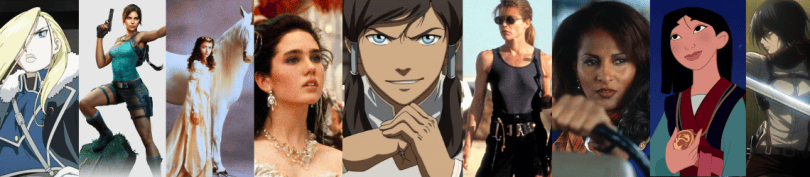
In the year of our lord 2026, we are still struggling to write strong female characters.
And no, I don’t mean the ‘do you even lift’ type of strong.
I feel like I need to put several disclaimers in place before I get into it: this is all MY OPINION. I’m not the storytelling police. And, I hate the word ‘females’ because of how it’s being used at the moment, but I’m just using here in the same way I would write ‘male’ characters or ‘non-binary’ characters. It’s not to dehumanise, just to make sweeping generalisations, I promise! Ok. Let’s begin.
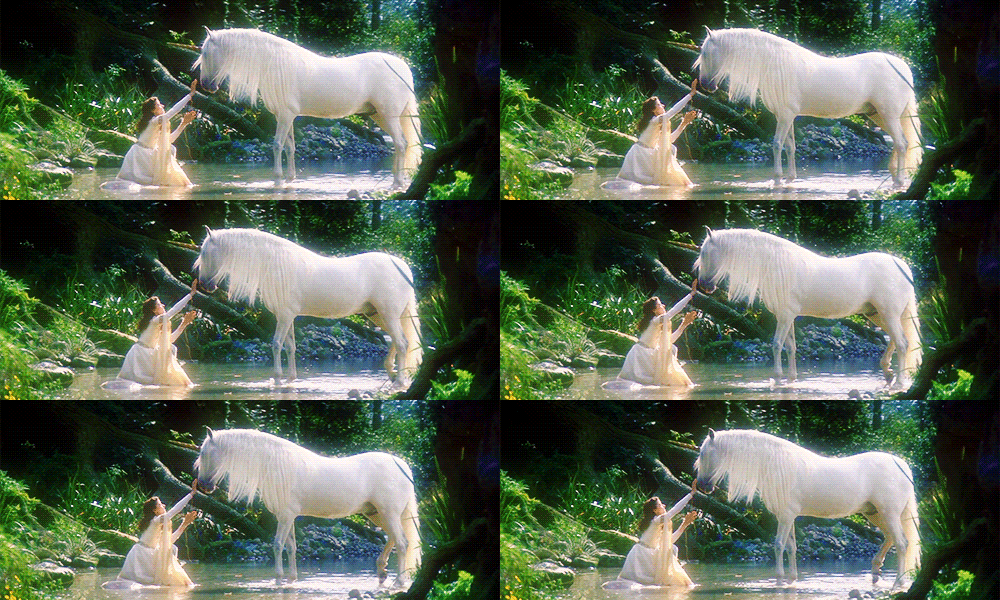
I’ve been on a movie binge after watching Disney’s Cruella and quite enjoying it. I ended watching Labyrinth, Legend, then Willow, the other day (because I am a full time student, and therefore a parasite on society right now) and it struck me that nearly all the women in these films had an agency that didn’t feel forced or marketed to me, even though they’re all pretty darn old (not Cruella, I mean the others). Granted, princess Lily isn’t a fighter in Legend, and I’m not sure it passes the Bechdel test, but Lily is a character of great inner strength and integrity. She makes a mistake in touching the unicorn, but goes out of her way to make it right, ultimately risking her life to save its mate. She could fit the damsel role, but she acts with agency, making her an active player in the story.
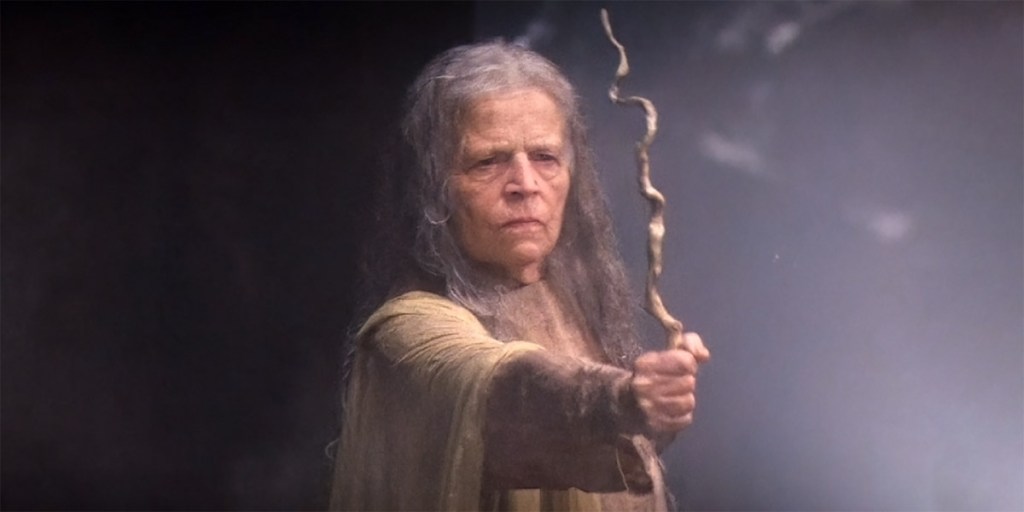
In Willow, the villain is a sorceress who wants to keep her power, whilst her daughter is a renowned warrior and commander (and she kicks Val Kilmer in the face; a true enemies to lovers moment). The midwife uses her status to sneak the baby out of the castle, ultimately sacrificing herself to protect it. Fin Raziel, the powerful sorceress, and effective strategist and leader, is an old woman. An actual old woman! No yassification either, just old, frail, and infinitely powerful. The women in these movies are kind, mean, strong, good, and evil, without needing to announce it. They just are.
Heck, even the baby princess in Willow seems to have agency. Whilst there is a distinct lack of racial diversity in these films (not taking into account the actors with dwarfism, whose village seemed more diverse than the rest of the cast), the representation of white women at least was there. Take the wins where you can, I guess.
Anyway, it made me think about what it means to write a strong female character.
What makes a strong female character?
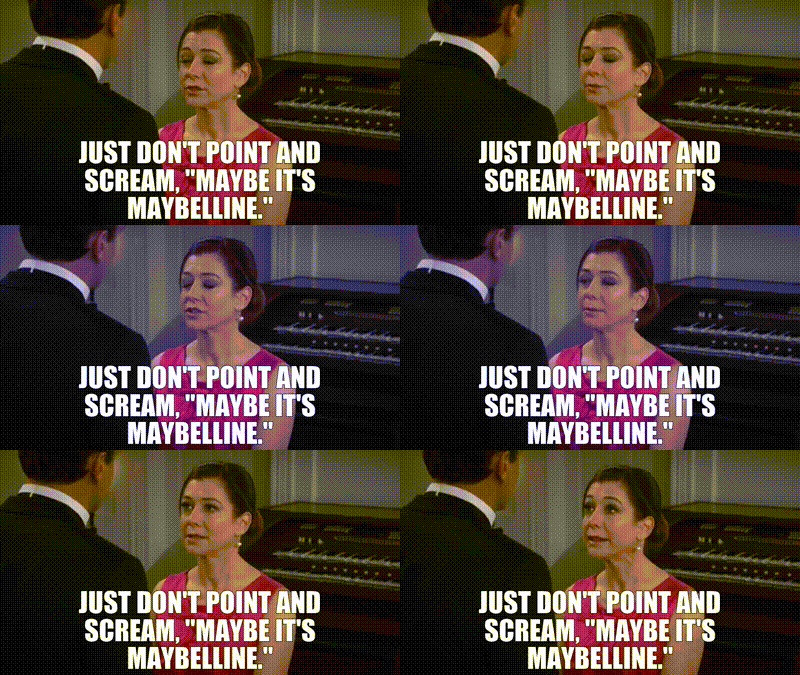
So, I did some research. And, like all reasonable human beings who want well considered answers to a question and civilised discourse, I went to Reddit.
Actually, it didn’t disappoint. I know, right?
Most answers I found had similar points: well written women are fully fleshed out human beings with flaws, agency, and contribute significantly to the stories they exist within. Poorly written female characters are one-dimensional stereotypes obsessed with their looks/relationship status, or obnoxious ‘girl boss pick-mes’ who have to hammer the message in that they’re powerful, tough, and ‘not like the other girls’.
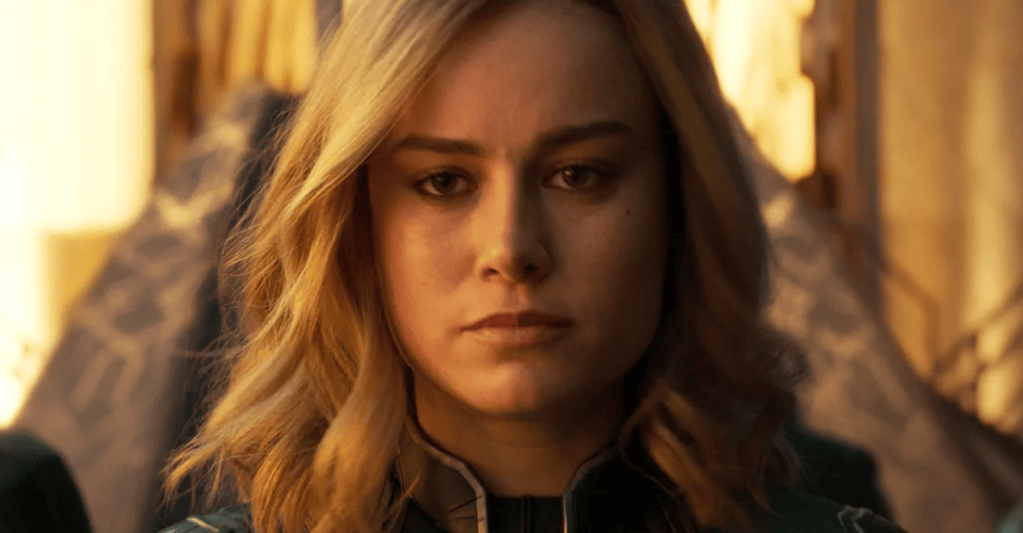
As an aside, I’m not gonna talk much about Rei, Captain Marvel or She Hulk, and how they girl-bossed/Mary-sue’d too close to the sun or whatever. One side says that anyone hating on them is just a misogynistic incel. The other side claims they were genuinely bad, and that if a studio has to scream from the rooftops that the characters are strong, they probably aren’t. The third side, the metaphorical pigeons shitting on the chessboard, are the actual incels, who see a woman (and God forbid a woman of colour) playing a lead role and velociraptor scream into reddit about how feminists are ruining everything.
I will never forgive the Star Wars fandom for cancelling Acolyte.
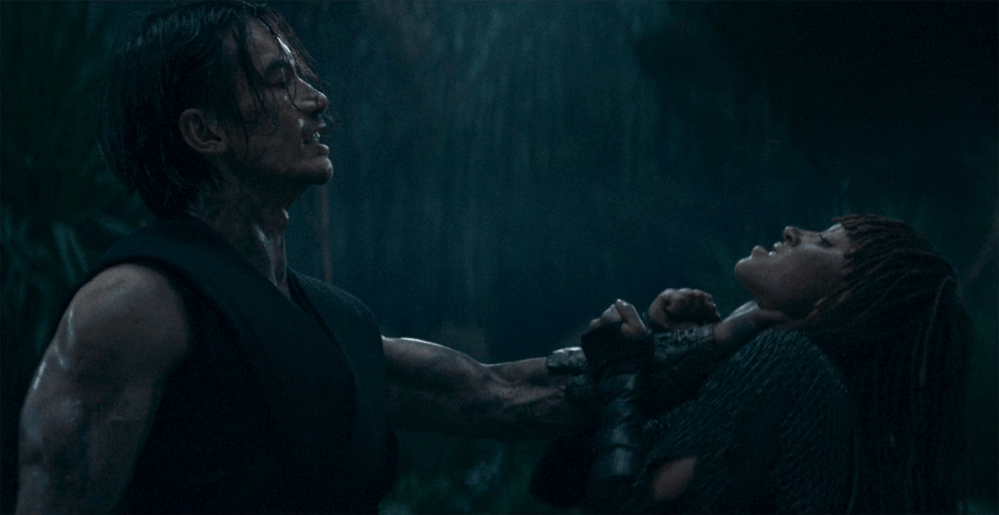
Obviously I enjoyed it for the plot…
Besides being blessed by plenty of absolute bangers in the movie world (Alien, Terminator 1 & 2, Jackie Brown, Silence of the Lambs, Amelie, Zero Dark Thirty, Rogue One, Arrival, Mad Max Fury Road, Furiosa, Ready or Not, Chocolate (the martial arts movie), Everything everywhere all at once, almost anything ever made by Miyazaki…), I’ve noticed that I’m finding it harder to resonate with, relate to, or even like on a base human level, a lot of recent lead female characters. Maybe it stems from a need to pull women away from being palatable for the male gaze (think Miley Cyrus shedding the ‘Hannah Montana’ vibe). Maybe it’s because of late stage capitalism reducing everything to easily digestible ‘tropes’ to sell merch.
Maybe it’s a deliberate attempt to make us hate female-lead movies, because coked-up movie execs are spending more time on red-pill tiktok. Damnit, you dumb bitches, why are you not mindlessly absorbing the regurgitated dog shit we feed you? Gaaawd!!!
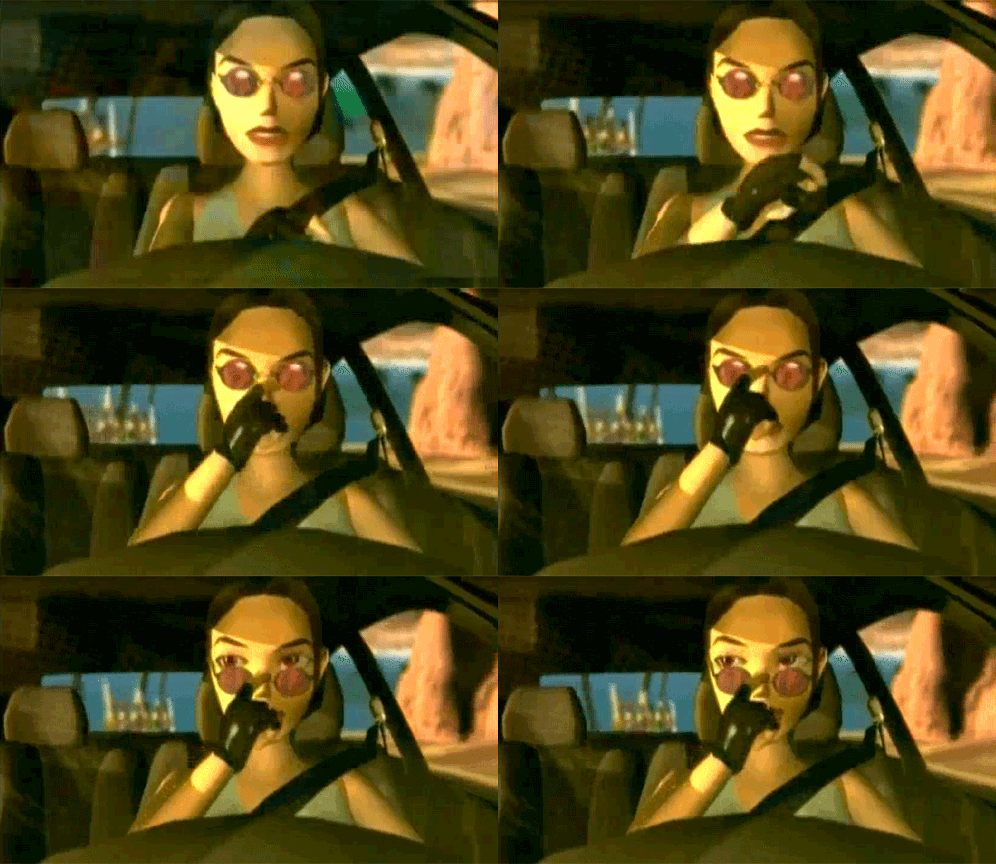
I am comparing things (possibly unfairly) to the golden age that I was raised in, the 90s. We had some pretty awesome movie, TV, and video game role models. Some real ‘girl bosses’, as the youth might say. We literally grew up with the term ‘girl power’. But, were 90s female characters strong? Were they actually strong, nuanced characters, or just some dudes muscle mommy fetish? Take Lara Croft for example. She is the pinnacle of ‘strong female character’, surely? But, is she well written? Nuanced? Does she need to be? Sure, Lara kicks arse, takes names, and represents true English culture: Stealing shit that rightfully belongs to ancient civilisations from other countries.
That said, she’s arguably only as iconic as she is because of her, ahem, assets. She exists because a game developer had a crush on Neneh Cherry, and the rest is history.
And I grew up watching my parents movies, so really, a lot of the icons I watched as a kid were from the 70s and 80s. I literally mentioned Legend and Willow at the start of the blog. My 90s icons were the Little Mermaid, Beauty and the Beast, the Spice Girls. Was it really a golden age, or am I just being nostalgic?
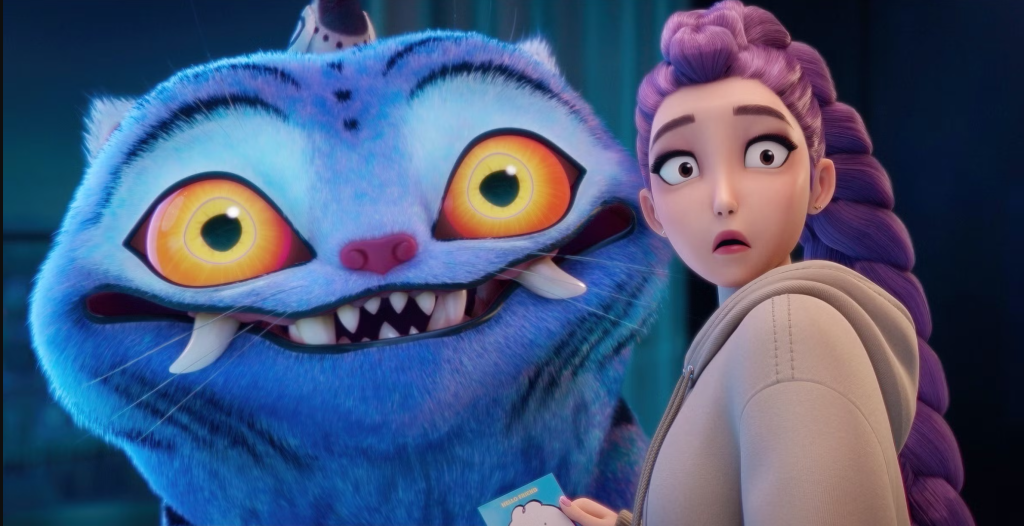
I’m not saying the bulk of the media of that era was as enlightened as many films and books are now. There were still many problems, many moments of needing a man to come to the rescue, female characters obsessed with romance, or reduced to support roles or accessories to the male MCs. However, I can’t help but feel like we’re going backwards. K-pop demon hunters has restored my faith a little bit, but the Honmun isn’t sealed just yet.
So, what’s the problem?
I think we all know exactly what the problem is.
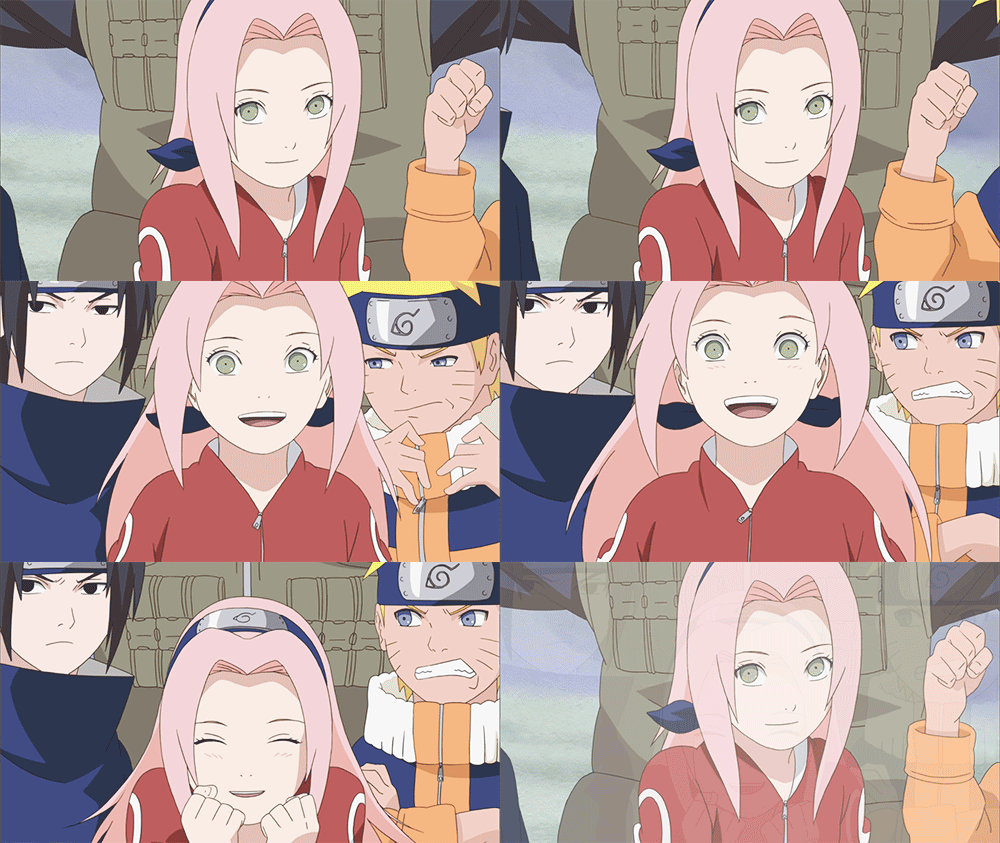
Joking! I will fight for my girl Sakura
Poorly written women is the problem. And it’s not just the menfolk committing this sin. Heck, I don’t know if I’m even qualified to talk about this. Can I even write a strong female character? And what’s the solution here, just write every woman like a man, then just change the pronouns?
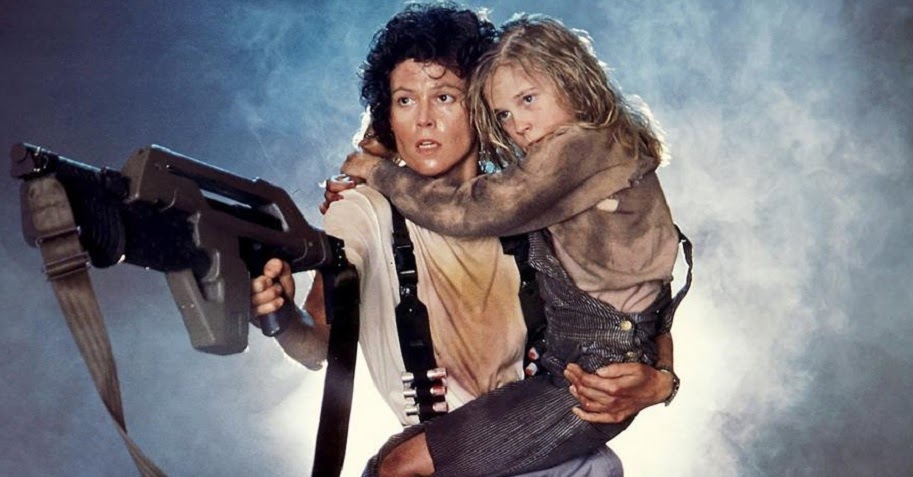
YES, I KNOW IT WORKED FOR RIPLEY.
The Hero’s Journey
There is more than one type of strength. Like I said in the intro, when I talk about strong female characters, I mean to say strength of character. Strength of writing. Female characters who contribute effectively to the narrative, who make the story more fulfilling without just being a love interest or making her strength a gimmick, or making her the author’s self-insert special special super chosen one with new added lightning powers. Characters who don’t just experience the plot, but drive it.
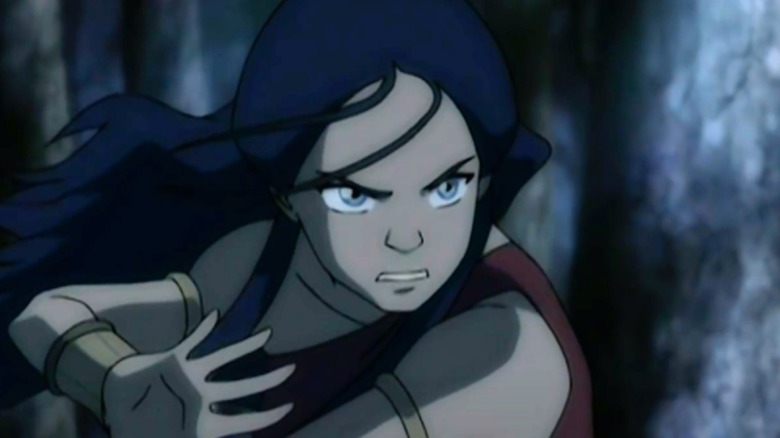
Too many writers are confusing the word ‘strong’ for ‘phenomenal cosmic power, perfect in every way’ Mary-sues who are completely unrelatable and unlikeable. The problem with a lot of the ‘girl boss’ characters we’re all tiring of, is that none of their strength feels earned. The writing is lazy, with one-dimensional tropes that seem to think strength equals “overly sarcastic comment and I can lift more weight than you.”
There is no ‘hero’s journey’ to speak of. No struggle, no character development, no nuance or mistakes or growth. Just ‘I’m a boss bitch and no one can question it!’
Some writers, in an attempt to make nuanced characters with flaws, lean far too heavily into it, becoming mean-spirited bullies, or allow the audience to experience what really should only be shared in a therapist’s office…
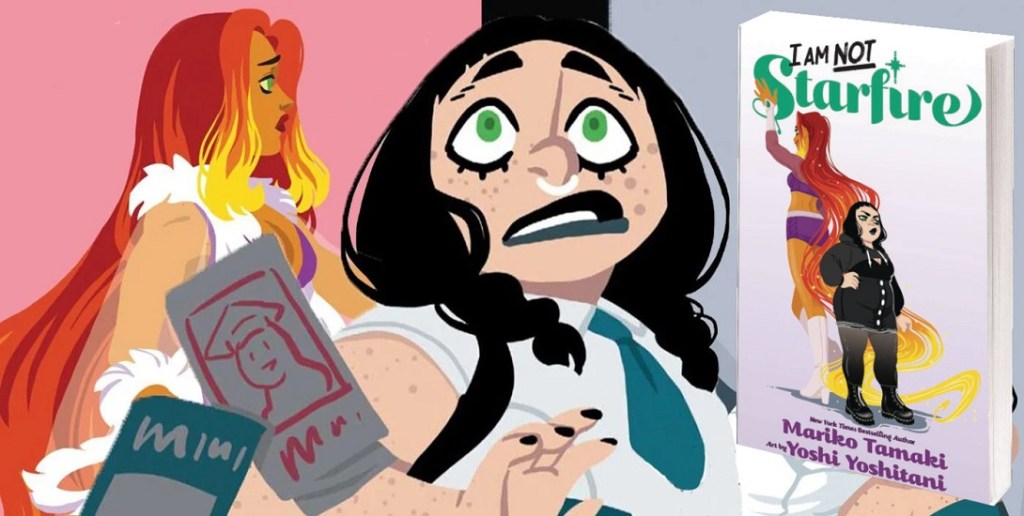
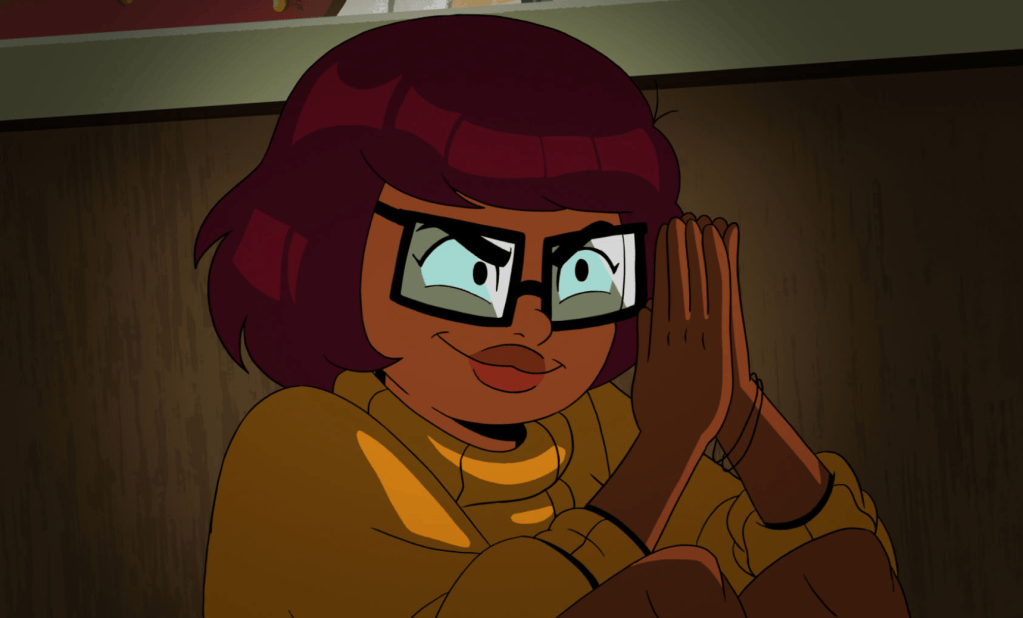
I’ve read novels, popular ones, with female MCs so unlikeable, dull, incompetent, and deliberately naïve – or straight up horrible – that I wanted to bash my head against a rock. Romantasy trends are particularly guilty for this. Yes. I said it. And I read all those fae romance books. I’ve read novels with female MCs who are supposed to be gifted tacticians, with advanced military knowledge, who are supposedly so smart and special (and did I mention lightning powers?), but, somehow, it’s just the writer telling me, begging me to believe it instead of actually having the character demonstrate it. It shows the writer doesn’t actually care about anything but their MC banging the tall, handsome man (who’s also an unlikeable douche, by the way).
Oh, and, while I’m at it, dark romance can catch strays too. Because what do you mean, you’re just letting this guy break into your apartment, that you don’t audibly gag when he calls you ‘little mouse’? What do you mean, he’s controlling, and surly, and growls and sheds on the carpet? That’s not your man, bestie, that’s a cat.
Surely all that is enough to give anyone the ick. Could you imagine Ellen Ripley tolerating this bullshit? Hell, could you imagine a Disney princess tolerating this bullshit? I think not.
I long for female protagonists who make sensible decisions, such as calling the police and changing the locks, or is at least an active participant in their apparent ‘romance’. If Christian Grey lived in a trailer park and worked at a gas station, it wouldn’t be romantic, it would be an episode of criminal minds. Sure, ok, I shouldn’t yuk anyone’s yum (I did say at the beginning of this post that I’m not the story telling police, after all). And, these authors must be doing something right, because, well, people seem to love it. And this is just one genre. Romance isn’t new. Problematic handsome men aren’t new. It’s just gotten more coverage with social media now.
Not all hope is lost. To balance things out, a lot of the books I’ve read over the years do have narratively strong female leads – Children of Blood and Bone is a great recent example of this. Amari is so gentle compared to Zélie, but when she finally has to, she fights. And she’s a capable fighter. Zelie isn’t a soft, easy going character, but she stands up for what’s right, and she can be kind when she needs to be.
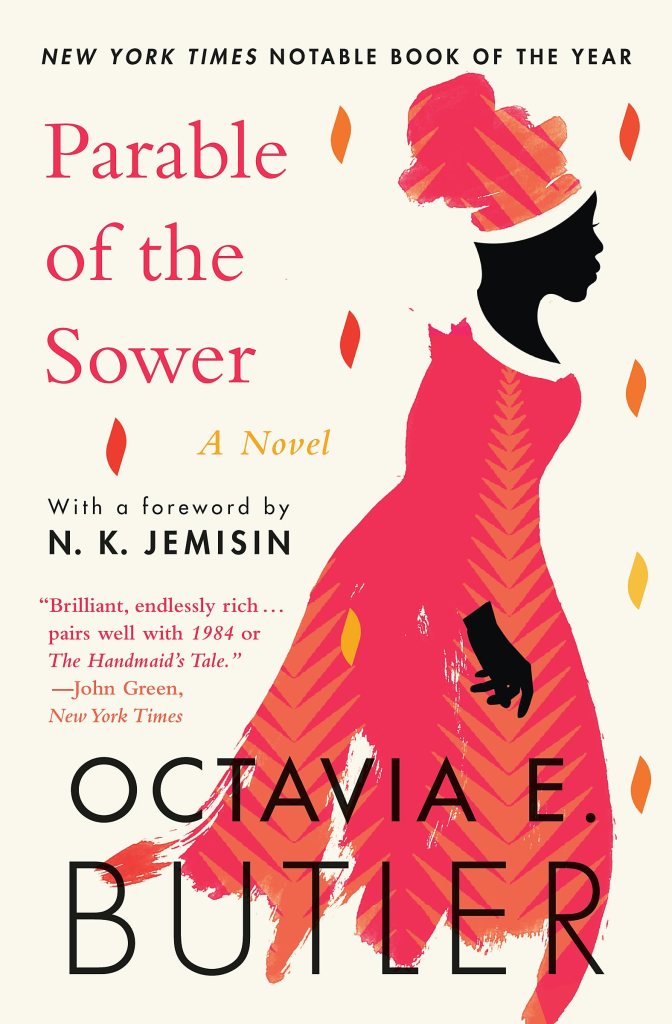
Another example is Parable of the Sower by Octavia E Butler. Main character Lauren is nuanced, flawed, full of fear and self doubt, but she’s a survivor, leader, and teacher.
So, not all is lost.
Let’s end this long, long rant, then. What advice can I give writers here? That’s assuming I can even write a strong female character. I can only tell you what I think makes for a good story telling experience, that feels authentic and nuanced.
So, here goes:
1) Give her agency. Is she making decisions? Mistakes? Actively participating? Is the plot happening to her, or is she driving it?
2) Fully flesh out her story. What are her fears, goals, ambitions? Does she have a life outside the situation? Does she have friends? If so, who?
3) Consider the Hero’s Journey. Is her power earned, or just assumed? And I don’t mean she has to really suffer to earn her place as the hero/villain (poor Korra), but what is the journey she goes through to become one? What does she learn as a result? Power that is earned feels more genuine than just vicariously living out your own power fantasy.
4) The strength of the hero is reflected in their antagonist. Give her something, or someone, to overcome that actually has meaning for her. It doesn’t have to be world ending, just relatable and relevant. It could literally be some jerk at her office – I’ve seen some great things with simple plot ideas and low stakes.
5) Remember what it means to be narratively ‘strong’. It’s more than physical. She can be strong in so many ways beyond being able to fight. Does she have integrity? Wit or cunning?
6) Avoid self-insert power fantasies at the cost of storytelling. A self-insert is fine, providing the exploration of the character goes beyond surface level. Try to keep in mind what you want to achieve in the writing. Is it catharsis? Is it for fun? Remember the ‘why’ of you’re writing.

